

Art Taipei, one of Asia’s longest-running international art fairs, will hold its 33rd edition at Taipei World Trade Center Hall 1 in the Taiwanese capital from 30 October to 2 November, with 127 galleries taking part. This year’s theme, Symbiosis, looks at how people and technology live alongside and shape each other, rather than treating the two as opposing forces.
Taiwanese galleries account for 66 of the 127 exhibitors and overseas galleries for the other 61. Korean participation has risen sharply, with 25 galleries from Korea this year compared with 15 last year, a sign of growing Korean involvement in Taiwan’s art market. The fair has spent three decades connecting Taiwanese galleries with international dealers and collectors, and is credited with helping establish Taiwan as a regional centre for contemporary art.
The event is organised by the Taiwan Art Gallery Association and was founded in 1992. That structure sets it apart from most of its peers: it is one of the few major art fairs in Asia run mainly by a gallery association rather than by a commercial fair operator, which keeps the dealers themselves at the centre of how the fair is planned and programmed.
The fair overlaps with the third edition of Taipei Art Week, which runs from 24 October to 7 November under the theme Velocity. More than 80 galleries, museums and alternative art spaces are taking part, spreading programming across the city in the days before and after the fair itself and giving visiting collectors a wider set of exhibitions to see during their stay.
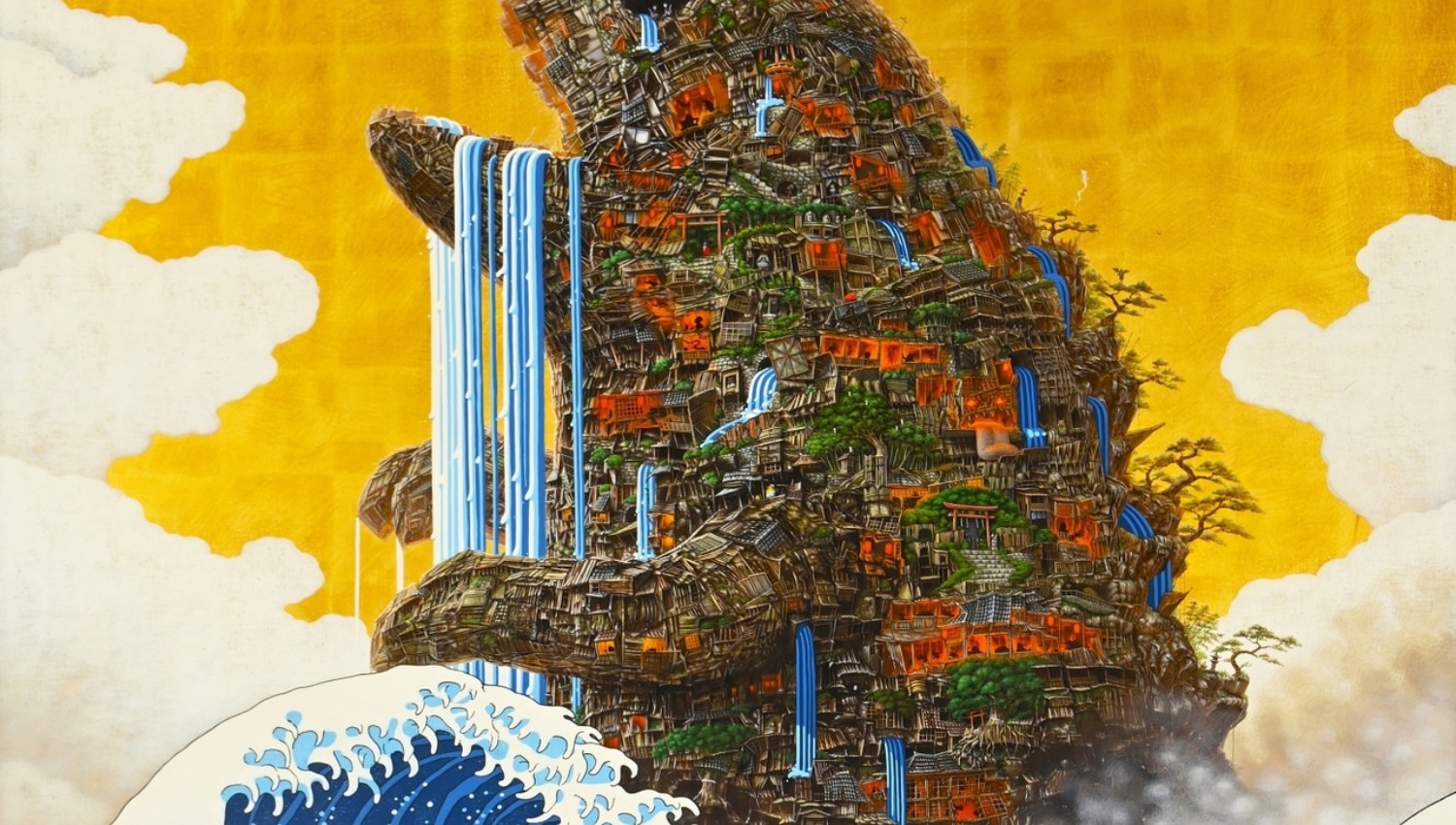
Among the artists on show, Japan’s Takumi Kama presents a new direction in his Kaiju series through Kyoto-based gallery Combine / Bami. The series draws on Japan’s giant-monster tradition, but imagines creatures born from consumer objects and waste rather than from science fiction. His new works set these monsters in scenery inspired by the Edo period, which ran from 1603 to 1868, and refer to Hyakki Yagyo, the Night Parade of One Hundred Demons, a procession of supernatural beings from Japanese folklore. Kama also widens his idea of waste to include digital information and virtual residue, a thread that runs through the featured work The First Appearance KAIJU and ties his monsters back to the fair’s theme of people living alongside technology.