
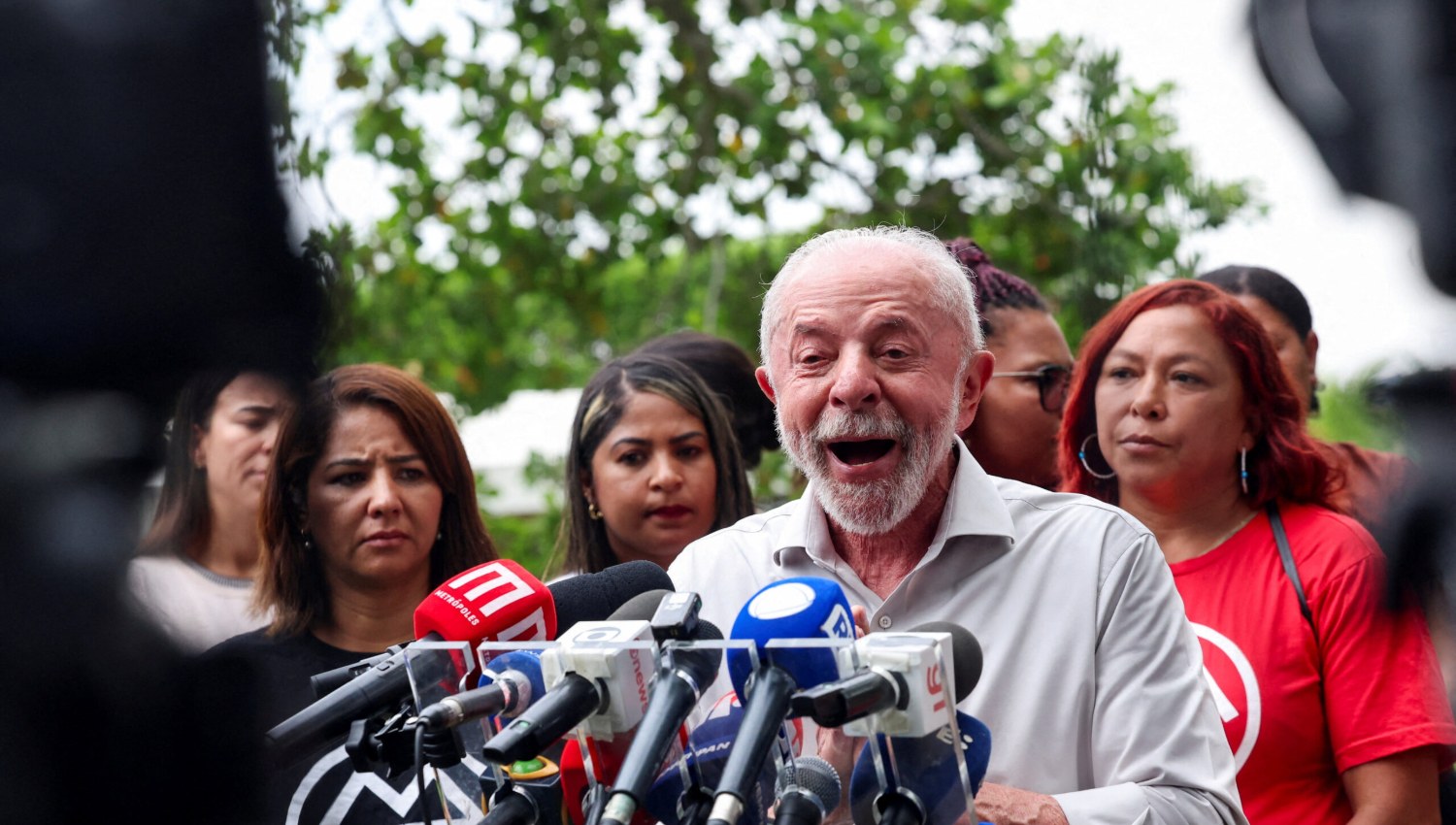

Brazilian President Luiz Inácio Lula da Silva’s re-election campaign has accused Meta of interfering in the election by restricting the reach of his content on its platforms, which include Facebook, Instagram and WhatsApp. Meta’s Brazilian office rejected the accusations, made on Saturday 10 October, as false, with the runoff just over two weeks away.
Lula, the Workers’ Party candidate, is seeking a fourth, non-consecutive term in a 25 October runoff against Liberal Party senator Flavio Bolsonaro, eldest son of former far-right president Jair Bolsonaro. In a statement, the campaign said Meta’s platforms had restricted the distribution of the president’s content. His campaign said that in recent days Meta had stopped Lula’s profile from promoting Instagram feed posts, and that view counts on a post from his official account had been interrupted, reducing its reach. It also said that before the first round his profile and those of other leftist leaders had disappeared from Instagram’s search function. According to the campaign, the problems “raise strong suspicions” that Meta was acting to help Bolsonaro, and it has filed a complaint with the electoral court.
On Saturday Brazil’s Superior Electoral Court (TSE) gave Meta 48 hours to say whether it had reduced the reach of the campaign’s posts and to explain the reported irregularities. The court ordered the company to set out, profile by profile, any measures applied to Lula’s official accounts and to account for anomalies in the metrics for the campaign’s videos.
Meta said the claims were not supported by the facts. It told AFP by email that many of the technical problems had not been limited to Brazil or to particular accounts, and said it complies with electoral rules and is committed to a level playing field on its platforms. Lula, who does not use a mobile phone, began a social media push after the first round that includes videos of him speaking directly to his online followers.
Bolsonaro finished first in the opening round on 4 October, and an AtlasIntel/Bloomberg poll released on Friday put him ahead in a simulated runoff, adding to the momentum from that surprise result. He took 51.1 per cent against 45.7 per cent for Lula. AtlasIntel surveyed 5,026 people between 3 and 8 October, and the poll has a margin of error of 1 percentage point.