
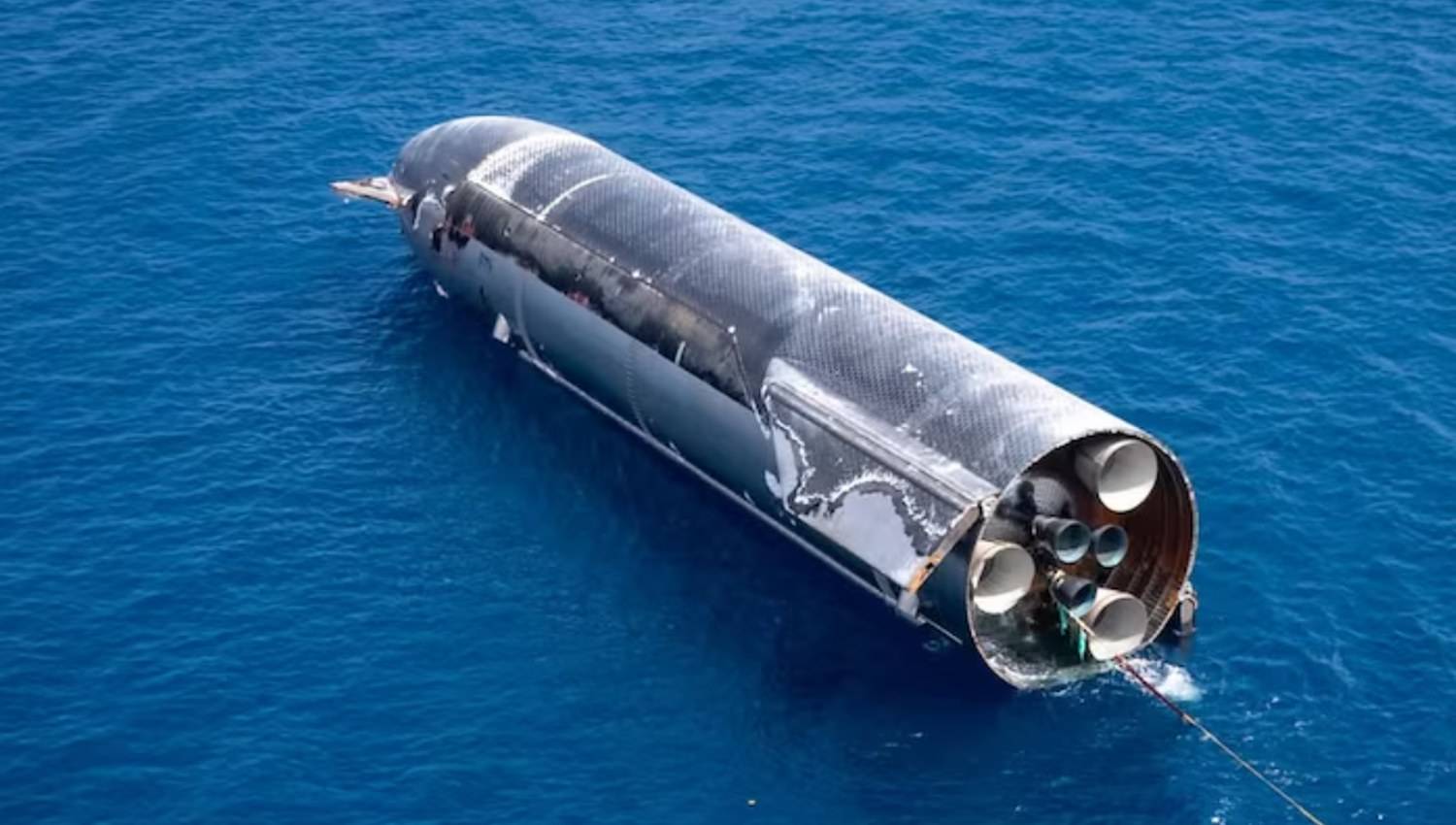

A large rocket belonging to Elon Musk’s SpaceX is being towed to the shores of Christmas Island after landing in the Indian Ocean, in an unusual spectacle for the remote Australian territory. Residents lined the rugged coastline in droves to watch the vehicle being hauled by two large boats, with an exclusion zone keeping smaller craft at a safe distance from the debris.
The chair of the island’s tourism association said it was incredible to see the spaceship up close, recalling rumours that the company might be coming before it simply appeared, huge, offshore. A local cafe owner said residents had flocked in to watch it float past, describing widespread fascination with something no one had expected to see, while a photographer who usually shoots wildlife said the sight had become the talk of the town, with people driving to vantage points for a view.
The vehicle is the Starship Ship 40, launched from Texas in late July. After a successful mission it re-entered the atmosphere and came down in international waters far off the coast of Western Australia. Its owner publicly confirmed a retrieval effort was under way, and a spokesperson for the national space agency said the government was coordinating with the company to recover the craft, which had been towed to Christmas Island after landing.
The episode followed the crash of an abandoned upper stage of a SpaceX rocket into the Moon two weeks earlier, which left a visible crater and pushed the issue of space debris into public debate. A space archaeologist at Flinders University said residents should expect to see more such junk in the coming years given the surge in launches, noting that studies suggest the Southern Hemisphere is likely to receive more of it than the north.
The country has recorded several space-junk incidents recently, including metallic spheres found on a north Queensland beach and debris believed to be from a Chinese rocket discovered near a mine site. Data from the United Nations space affairs office shows the number of objects launched has climbed sharply, from 586 in 2019 to 4,510 in 2025, with the United States responsible for by far the most, followed by China and Russia. For now, though, the island’s focus is on the unexpected visitor bobbing just offshore.