
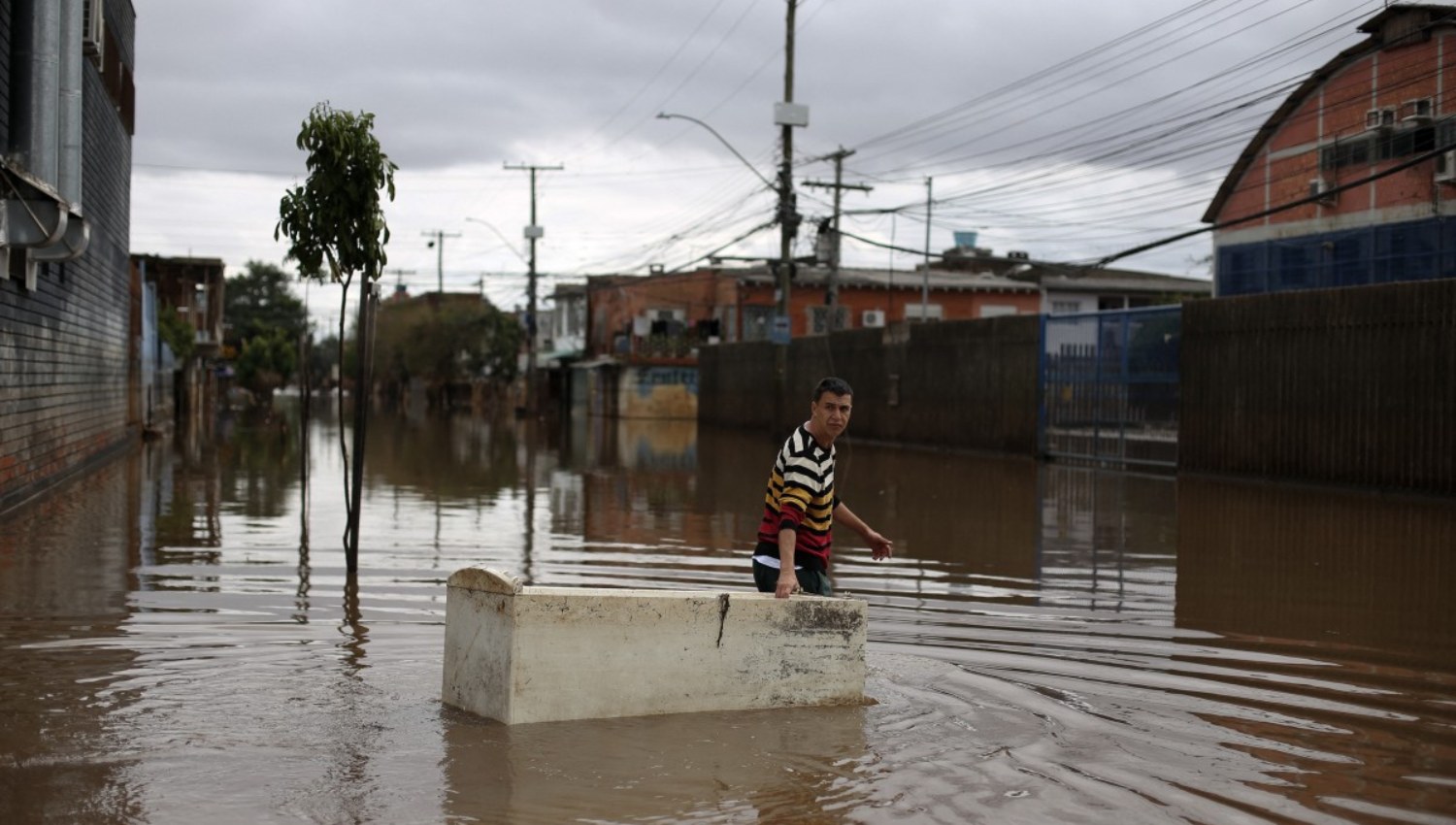

Brazilian prosecutors have sued Shell’s subsidiary in Brazil for US$108 million over the floods that struck the south of the country in 2024, in a case described as unprecedented. The suit, filed on Friday together with the Brazilian NGO Instituto Preservar, seeks collective material and moral damages for the disaster in Rio Grande do Sul state.
Torrential rain in April and May 2024 caused historic flooding that killed nearly 200 people and displaced 500,000 more. According to court documents seen by AFP, prosecutors argue that the British energy company should be held responsible for past and present emissions linked to exploring, producing and selling fossil fuels. They say its liability should match its contribution to global warming, estimated at 2 per cent of historical global greenhouse gas emissions. The US$108 million figure covers both material and moral damages.
Maria Antonia Tigre, director of global climate litigation at the Sabin Center for Climate Change Law, said it was the “first time a national public prosecutor is suing an oil major” over a climate disaster. Thales Miola, a lawyer at Instituto Preservar, said in a press release that the cost of climate damage should not fall on society alone and that major polluters must also answer for the losses they help cause.
AFP described the filing as a new phase in the global legal fight against oil majors. It adds to a growing number of claims seeking compensation from large emitters in proportion to their emissions, several of them brought by people in Asia. Survivors of Typhoon Odette in the Philippines are suing Shell in the UK, residents of Indonesia’s Pari island have sued cement maker Holcim in Switzerland, and Pakistani farmers affected by the 2022 floods have sued RWE and Heidelberg Materials in Germany. Last year German courts rejected a compensation claim against RWE by Peruvian farmer Saul Luciano Lliuya, but left open the possibility that major emitters could be held liable.
Other efforts have stalled. Climate groups have lost cases against oil companies in the United States, and New Zealand changed its law to block a lawsuit brought by Māori activist Mike Smith against six domestic companies. Smith has vowed to keep fighting, and the Brazilian case will now test whether a national prosecutor can succeed where private claimants have struggled.