

Japanese artist Yayoi Kusama, whose signature polka dots covered paintings, sculptures and immersive installations shown in museums around the world, has died at the age of 97. Her studio announced the death this week, saying she passed away on Aug. 14 at a hospital in Tokyo without giving a cause. It said she continued to paint until her final days, describing her as devoted to what it called an exploration of forever love and the eternal soul.
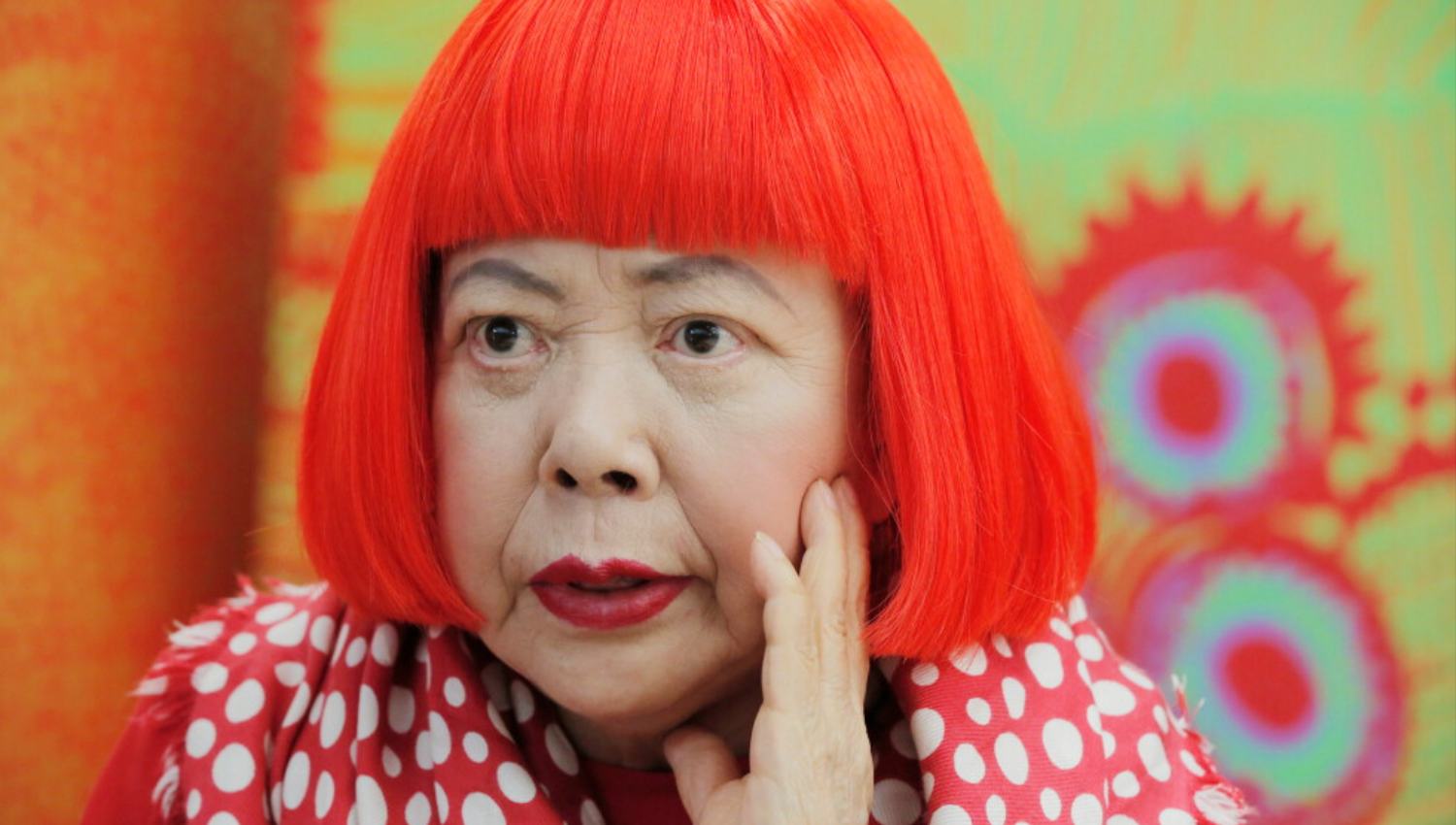
Kusama ranked among Japan’s most celebrated contemporary artists and was widely exhibited internationally, including at the Museum of Modern Art and the Whitney Museum of American Art in New York and the Museum Ludwig in Germany. Repetition was her trademark. Nets, swirls and above all dots danced across her canvases and reappeared as glowing spheres and points of light in her installations, rendered in vivid, psychedelic color. “Polka dots are fabulous,” she said in a 2012 interview, appearing in her familiar orange bob wig and dotted attire.
She often said she painted the world the way she saw it, covered in spots that she linked to hallucinations she had experienced since childhood. Kusama spent decades in and out of psychiatric care, yet the condition never slowed her output. In 1957 she became one of the first Japanese women to travel to New York to build an art career, enduring years of poverty and obscurity while the fashionable style of the moment favored drips and smears rather than dots.
Recognition arrived more fully in her later years. She collaborated with fashion houses including Louis Vuitton and licensed her imagery for teacups, T-shirts, key chains and store displays. In 2008 one of her works sold at auction for 5.8 million dollars, and in 2016 she received the Order of Culture, among the highest honors Japan grants an artist. On accepting it, she said she was more determined than ever to keep working, insisting her sincerity and devotion were central to her legacy.
During her New York years she staged unconventional performances, placing paper circles on people and once on a horse, and befriended figures such as Andy Warhol, Georgia O’Keeffe and Joseph Cornell. Across a long career she also made films and published novels, often saying she could not fully explain where her ideas came from. She described herself in one breath as an artistic revolutionary and in the next admitted to a constant, disarming fear, a mix of boldness and vulnerability that shaped both her life and her work.