
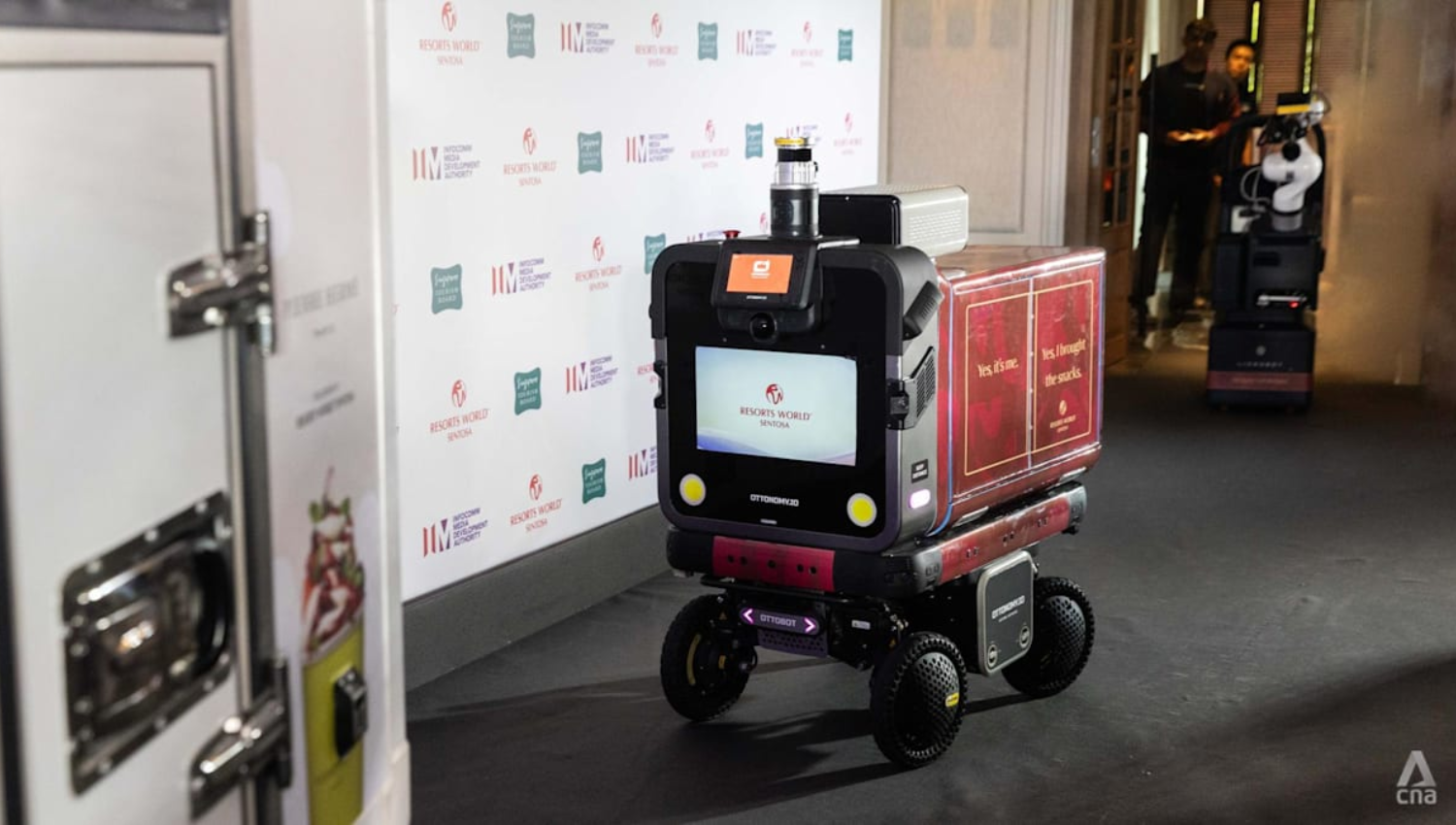
Robots that scrub washrooms, guide visitors and ferry pastries in driverless refrigerated vehicles are being put through their paces at Resorts World Sentosa (RWS), which has turned the integrated resort into a testing ground for artificial intelligence.
The two-year programme, named Symbiosis, will use the resort to build and try out physical and digital AI tools aimed at operational and workforce problems, according to an RWS announcement on Wednesday (Nov 25). Separately, staff have been trying out an app that lets them rehearse guest interactions through AI-driven simulations.
Two agencies back the living lab: the Singapore Tourism Board (STB) and the Infocomm Media Development Authority (IMDA). IMDA’s role is to line up tech partners, help pick projects and write up best practices, while STB, together with RWS and other companies, will look to convert trials that work into solutions the wider tourism sector can adopt. RWS said the effort supports the National AI Impact Programme, under which the government aims to help 10,000 enterprises deepen their use of AI and make 100,000 workers AI-bilingual over three years.
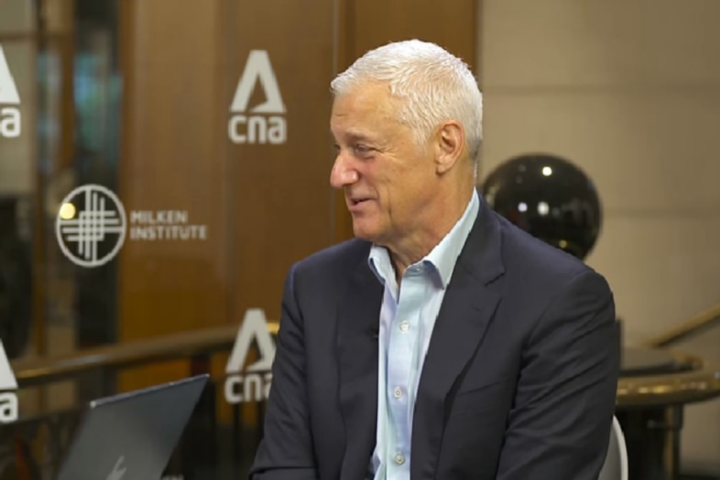
Tan Kiat How, Senior Minister of State for Digital Development and Information, spoke at the launch, held at The Laurus. He said the goal is to get autonomous robots working smoothly across different businesses, systems and settings, and that lessons from RWS could be applied in hospitals, airports and business parks. He cautioned that physical AI is still young, and some uses may not be ready or commercially viable.
Alvin Tan, RWS executive vice-president of IT, said many tourism jobs are repetitive and time-sensitive, from shifting supplies, food and drinks across the resort to readying rooms, kitchens and outlets. “AI and robotics can take on those tasks,” he told CNA, leaving staff more time for personal service and jobs that call for judgment, problem-solving and empathy.
At the Pierre Hermé patisserie, an autonomous refrigerated vehicle now takes pastries along an underground service network from the central kitchen, about three times a day. Each run used to take a buggy driver at least 20 minutes, and chef de cuisine Maxine Ngooi said the robot lets staff give better service. With IMDA’s help, RWS plans to grow this into a surface and underground delivery network for pastries and cooked food. Equarius Hotel is looking at robots that bring guest amenities from storage to guest floors, an idea that could be extended to every RWS hotel. At Adventure Cove Waterpark, an all-terrain, weather-resistant robot delivers meals to two kiosks from The Bay Restaurant, and another robot helps cleaners with routine washroom work.
The Empathy One app uses scenarios from the Singapore Institute of Technology’s Centralised Skills Assessment and Validation Initiative (CSAVI). Staff speak with AI guest avatars that show different emotions and receive a score on how empathetic and effective their replies were. At least 50 employees have tried it so far, and RWS plans to extend it to 250 across the attractions, food and beverage and hospitality divisions.
Tan said success after two years would mean a set of AI and robotics tools tested across the resort and ready to scale, along with a workforce that trusts and uses them.
Based on reporting by Anusha Selvamani for CNA.