

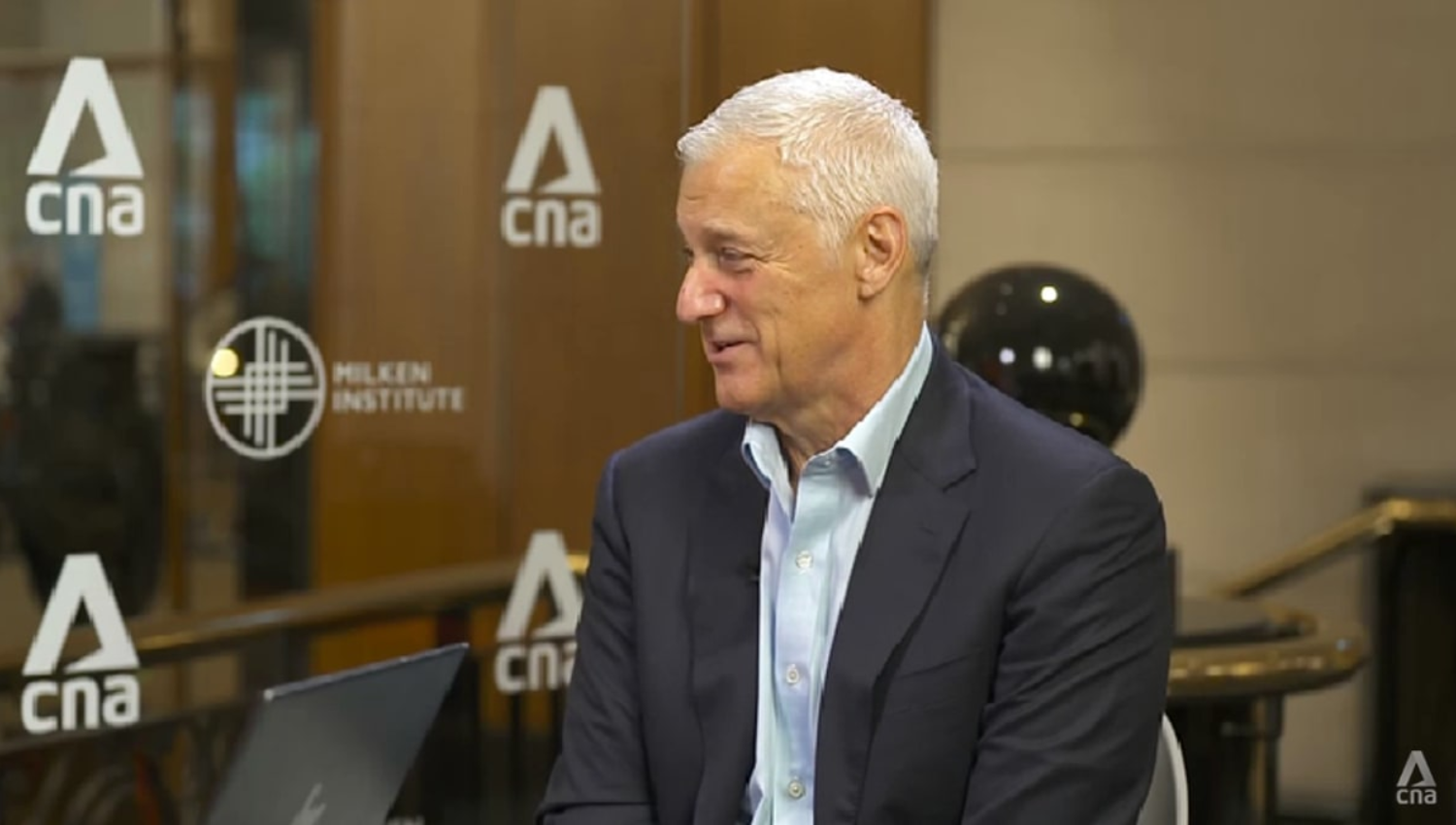
Artificial intelligence needs tougher regulation and closer international cooperation to keep its risks in check, according to Bill Winters, who leads Standard Chartered as group CEO. He made the comments on Friday (Oct 9).
Winters spoke to CNA at the Four Seasons in Singapore during the Milken Institute Asia Summit, a three-day gathering from Oct 7 to 9 where business and government leaders discussed challenges in geopolitics and the economy, and AI was high on the agenda. He covered the openings AI creates for business, worries over cybersecurity and jobs, and his outlook for China.
Asked whether governments should step in, Winters said few industries had ever needed rules more, noting that a new aspirin formulation takes three years to clear regulators while AI has no guardrails at all. He accepted that tech firms mean to build AI responsibly, but pointed to rivalry between China and the United States, each worried about the other pulling ahead, and said the case for cooperation among global players has rarely been stronger, perhaps second only to nuclear weapons.
Standard Chartered already uses AI to create new customer experiences and run more efficiently, he said. Cybercriminals could also turn the technology against corporate security systems, and the best protection is a strong set of AI-based defences. Winters described the situation as an arms race in which the bank is holding its own, but cautioned that the risks will not vanish and that some bad things will happen in the next few years.
On jobs, Winters said automation will change work at the bank without necessarily shrinking it. Nearly 25 per cent of Standard Chartered’s former roles have been automated, yet its overall headcount has grown, and about 85 per cent of staff whose roles were displaced have been retrained for other positions. The bank will keep investing in reskilling as AI spreads, since the skills it needs will look very different, he said, and roles that depend on human judgment or contact will stay important. In wealth management, digital tools can already offer investment guidance, but clients still want human relationship managers. “People still trust people,” he said.
Turning to China, where a long property slump has weighed on domestic demand, Winters pointed to fast growth in batteries, electric vehicles, green technology and advanced electronics such as chipmaking, which are reshaping the country’s industrial base, especially through robotics. Property has not recovered, other manufacturers face rising costs and tariffs, and public finances are under strain as local governments earn less from land sales. Even so, he is confident about China’s prospects because Beijing still has fiscal and monetary tools to support growth.
Global growth has held up despite higher borrowing costs and stubborn inflation, Winters said, with energy and food prices and supply-chain disruptions, including to energy supplies from the Gulf, keeping inflation high.
Based on reporting by Marcel Pereira for CNA.